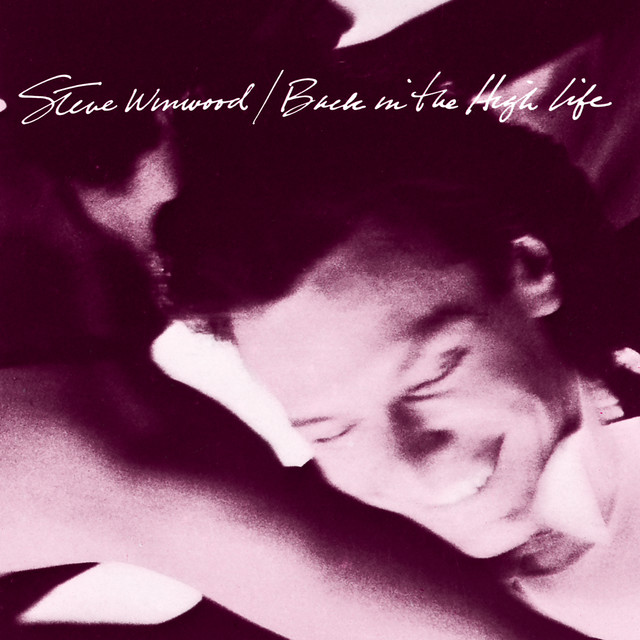
Back In The High Life - Steve Winwood (1986)
This is cheating, I suppose. It’s from the second half of the decade, long after all these changes I’ve been talking about were standard procedure. If I was serious, I would have talked about his 1982 record Talking Back To The Night since it fits more into what I’m investigating.
But while I thought this album was some old-people yacht-rock bullshit when I was a kid, I’ve since come to really appreciate Winwood’s trajectory as an artist, his place in rock history, and this album as an excellent example of his resilience.
To recap my blogging from several years ago about why Winwood is interesting:
Winwood has had a pretty amazing career. A multi-instrumentalist who was a gifted soul singer already as a teenager with the Spencer Davis Group in the 60s, he formed the prog band Traffic, one of the era’s most interesting groups. He played on some of the top rock records of the 60s and 70s. He made massive synth-driven pop hits in the mid-80s, and kept on adapting his sound to radio-friendly tastes to keep making hits into the early 90s.
Basically, even though he’s seldom mentioned as one of great rock and pop stars, he stuck around longer and was more successful than almost any of his peers.
Winwood was, as usual, heavily involved in the nuts and bolts of the record. He has a production credit as well as playing mandolin and guitar in addition to the slew of different keyboard instruments used throughout. Many of those keyboards, especially the various synths used, were housed at Unique Recording Studios in Manhattan where much of the recording took place.
Much of the recording was done with programmed drums. Then, in the places where that didn’t seem to work, the team brought in session drummer extaordinaire JR Robinson to track live drums over it. There’s a similar balance between synths and more organic keyboard sounds, as well as vocal and horn parts that were sometimes live and sometimes created.
Here we have the gist of why I think this record is great: Winwood and his collaborators caught exactly what many other older artists were missing: technology isn’t a substitute for creative energy and interplay of musicians and their ideas. When it works best, technology bridges the gap between that creativity and the total freedom of expression the recording process can offer.